
“The cartilage doc” – preserving joints instead of replacing them
Conservative orthopaedics
Many musculoskeletal complaints have more than one cause. There is often a structural component (joints, bones, muscles, etc.) and a functional component (mobility, strength, movement patterns).
The guiding principle “first the diagnosis, then the therapy” is therefore the basis of my treatment concept. On a structural level, in addition to the basic physical examination, imaging with ultrasound, X-ray or magnetic resonance imaging is carried out in many cases.
The interdisciplinary structure of our joint practice with the departments of orthopaedics/trauma surgery, neurosurgery and radiology offers these diagnostic procedures at the highest level.
Together with our sports and rehabilitation department, additional functional diagnostics are carried out with movement analyses, footprint measurements and muscle function tests. The appropriate therapy is coordinated with the patient.
Motion analysis
In the case of complaints of the “musculoskeletal system”, it is only logical to also examine it in “motion”. This also enables the actual cause of interlinked symptoms and compensatory movements to be identified and treated in a targeted manner. The analyses are carried out by my team from the Sport & Rehab department and myself. Following therapy, a repetition of the movement analysis objectifies the treatment result.
More on this under the Return to Sport menu item.
InBody body composition scale – What is my body made up of?
Our InBody body analysis (body composition analysis) provides you with very detailed information about your body composition and fitness level. We calculate the percentage of fatty tissue, muscle and water.
In addition, we can also distinguish whether the water in the body is mainly in the cells or in the tissue. The water content of the cell provides an indication of cell health.
Your weight and BMI alone don’t say much. We work with the InBody scale to measure much more than just your weight and to be able to create a training plan that is optimally tailored to your needs. Unlike commercially available scales, which in most cases work with algorithms and only determine a fraction of the information, with the InBody scale we rely on the same technology used by NASA, major sports institutions and many professional clubs.
Diagnosis of back pain using spinal column measurement
All too often, people ask themselves the question: back pain, what to do? It is important to recognize the individual cause of the pain. The basis of any therapy is therefore precise diagnostics. Traditionally, orthopaedics relies primarily on imaging diagnostics, such as an X-ray examination and magnetic resonance imaging (MRI), to examine the structure and thus identify specific back pain.
What is rarely considered, however, is the function that leads to functional back pain or non-specific back pain. With our diagnostic and treatment approach at the Beta Klinik, we get to the bottom of both causes.
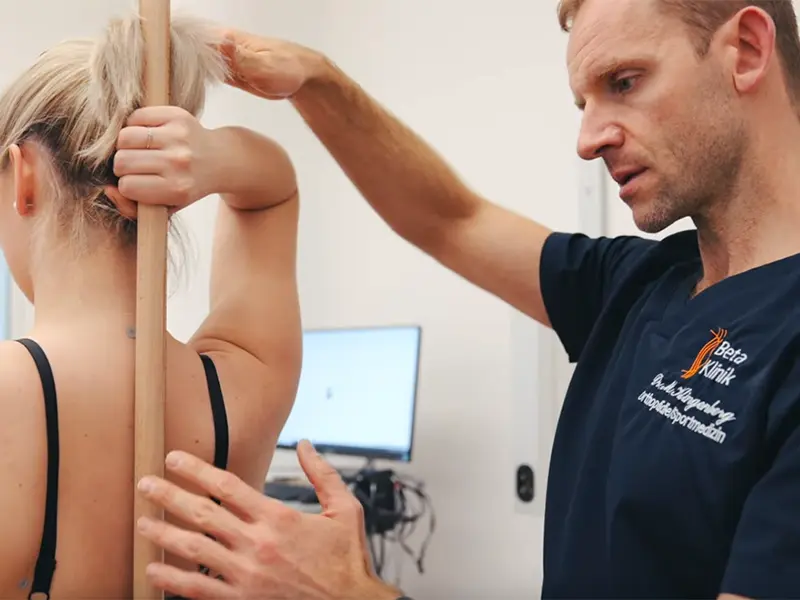
Where does the pain come from?
The majority of spinal complaints are based on functional (“non-specific”) complaints. This means that the cause lies in our posture, the control of our muscles and their performance. The cause of back problems can also lie in our connective tissue, particularly in the fasciae.
Other factors that are often not directly considered are our teeth, the temporomandibular joint, our breathing and, of course, our stress levels. But the area of nutrition, especially intolerances, is also often not taken into account, although it can often be responsible for back problems.
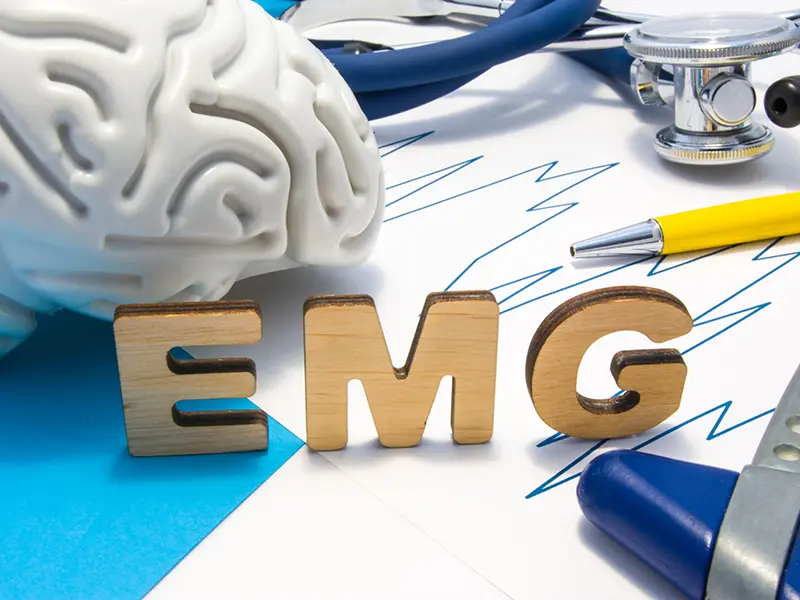
Electromyography (EMG) + biofeedback training
What the ECG is for the heart, the EMG is for the muscles. It answers the question of whether a muscle can be controlled and relaxed properly. Increased basic muscular tension can be reduced quickly and successfully through biofeedback training, for example.
Conversely, individual muscles can also be specifically strengthened with biofeedback training.
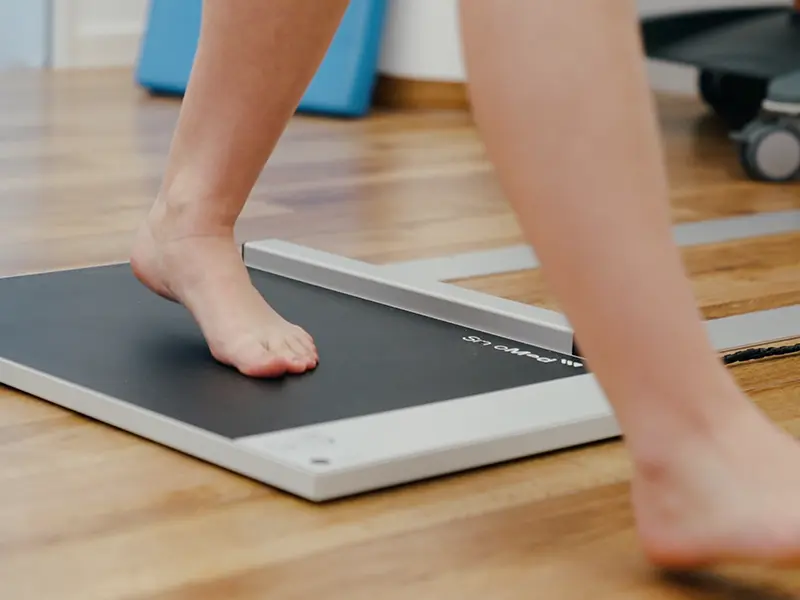
Footprint measurement (pedobarography)
The position of our feet and our gait pattern can be the cause of numerous complaints not only in the feet themselves, but also in the knee, hip joint or back.
In the case of malpositions, passive therapy consists of fitting suitable insoles and active therapy consists of targeted training of the foot muscles.
Magnetic field therapy
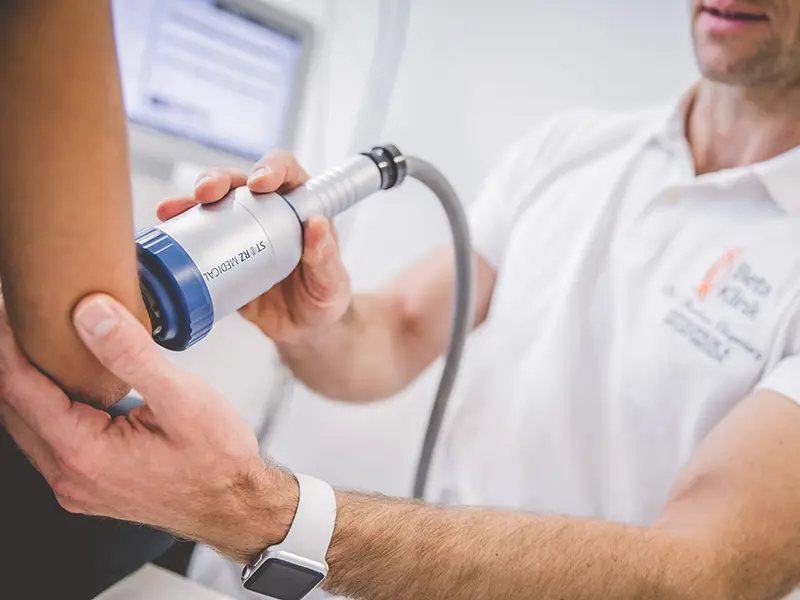
Gastric field therapy is a highly effective method for pain relief and for stimulating and relaxing muscle treatment. We have been able to verify the success of these treatment methods in particular through our own studies.
The main advantages of this method are the rapid effect, the absence of needles and the ability to work hygienically through clothing and bandages.
Bone density measurement (DXA)
Is osteoporosis present and is there an increased risk of bone fractures? Together with a blood count to check the vitamin D level, bone density measurement is the simple and quick answer to this question.
If interested, the body composition, i.e. the relative proportion of muscle, fat and water in the body, can also be determined in the same examination.
Infiltration therapy
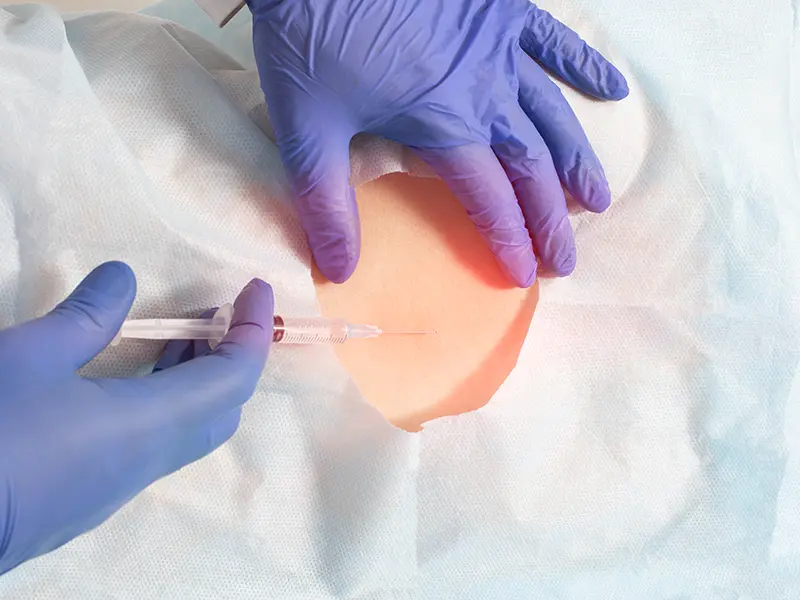
A targeted injection often provides the patient with rapid symptom relief. Knowledge of the diagnosis and the implementation of a sensible overall strategy are crucial for long-term therapeutic success.
For osteoarthritis of the joints, I use Traumeel, hyaluronic acid, the body’s own plasma and stem cells. I also treat ligaments, tendons and muscles.
More on this under the menu item Osteoarthritis treatment.
Osteopathy
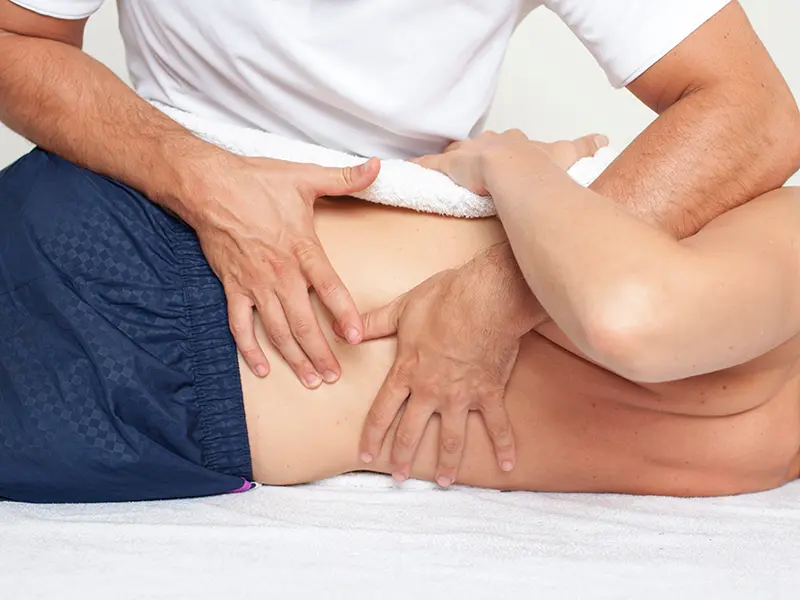
In addition to the field of chirotherapy / manual medicine, I use various osteopathic techniques to treat musculoskeletal complaints holistically and sustainably.
Fascia plays a key role in acute and chronic musculoskeletal complaints and their treatment. As part of the connective tissue, fascia runs through the entire body as a connecting network, linking even distant structures with each other.
Fasciae can be treated very effectively not only by a therapist, but also by the athlete/patient themselves. The combination of osteopathy with mobilizing and stabilizing training permanently eliminates pain and secures the treatment result.
Chirotherapy / manual medicine
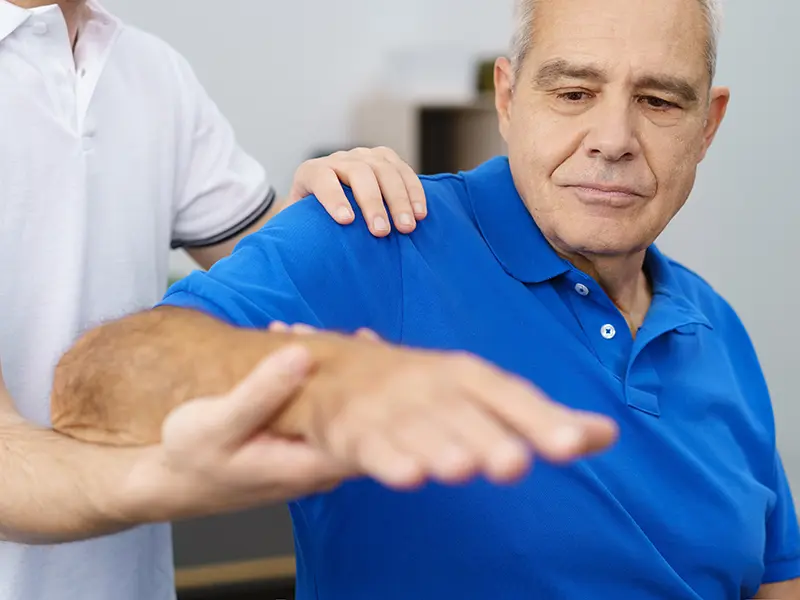
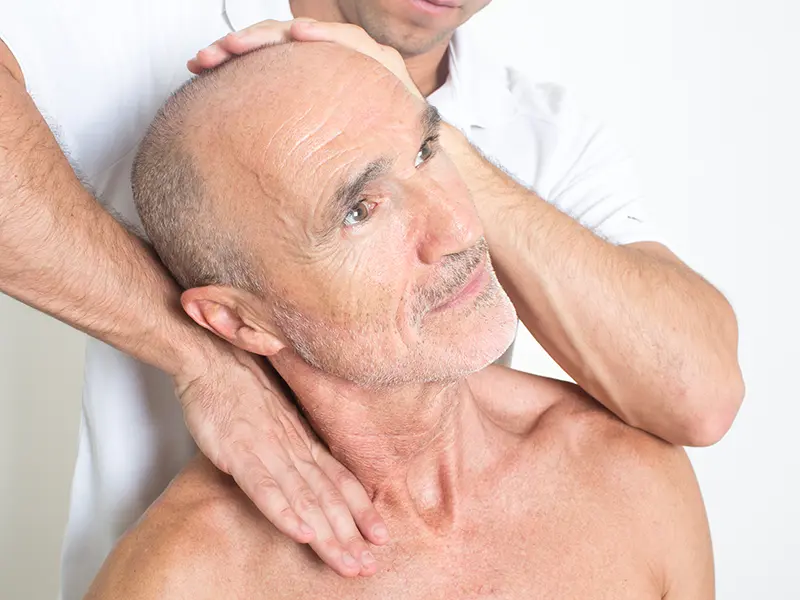
Chirotherapy is a method of differentiated examination of the musculoskeletal system and subsequent treatment of functional disorders. During the examination and therapy, the doctor “lends a hand” (from the ancient Greek “cher” for hand) and feels his way to the diagnosis.
Accurate diagnosis of the often unspecific symptoms is a prerequisite for successful long-term treatment and is not possible with imaging alone (X-ray, MRI, sonography) for many musculoskeletal disorders.
Combined with acupuncture, alternative healing methods and exercise therapy, a problem can usually be treated causally and symptomatic therapies with painkillers that have many side effects can be shortened or avoided.
Acupuncture
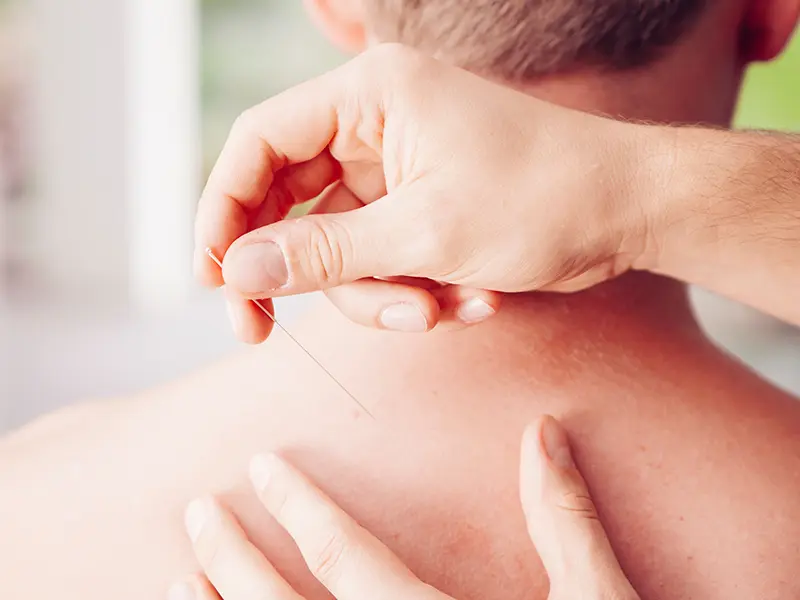
Acupuncture is a millennia-old Chinese healing method that has also spread to Europe since the middle of the last century. In contrast to Western models, the thought model on which acupuncture is based works with meridians (pathways). I do not see a contradiction in these different approaches to my therapy, but rather a very useful addition to my therapy concept.
I regularly use acupuncture for certain musculoskeletal disorders, especially knee, shoulder and back pain, with great success.
The key to long-term success usually lies in a combined therapy with manual-medical techniques, exercise therapy and, at times, a change in diet.