

Partner Olympiastützpunkt
Knorpel Doc - Dr. med. Markus Klingenberg
“The cartilage doc” – preserving joints instead of replacing them

Diving medicine

Every year, the number of trained divers worldwide, which already exceeds 10,000,000, grows by around 500,000. Diving is a fascinating sport that is easy to learn and can be practiced well into old age.

Most training organizations and diving centres attach great importance to the safety of their divers. This also includes a current medical certificate of fitness to dive in accordance with the guidelines of the German Society for Diving and Hyperbaric Medicine (GTÜM e.V.), which serves to minimize the individual risk of the diver.

Basis for diving

The basis for diving fitness is a comprehensive questionnaire, followed by specific examinations. Individual questions are then discussed in detail and the diver receives a multilingual and internationally recognized certificate. The entire examination takes between 20 and 45 minutes, depending on its scope. Depending on previous illnesses and age, this examination should be repeated every 1-2 years.

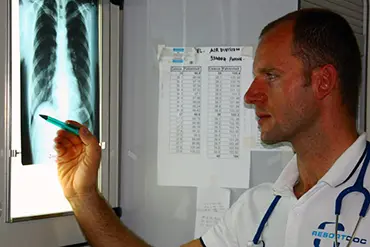
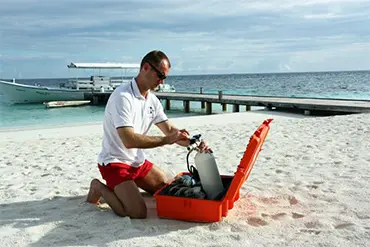
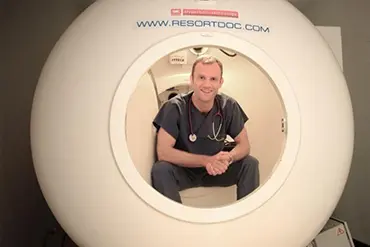
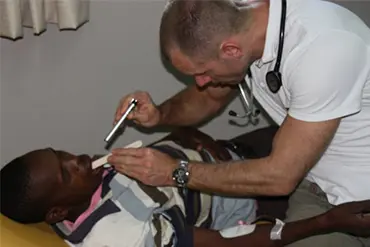
In addition to my qualification as a diving medic, I am also an active scuba and apnea diver and certified as a Dive Master and Assistant Instructor. I gained experience in the treatment of diving accidents on site and in the hyperbaric chamber as a senior diving medical officer in 3 resorts in the Maldives and Seychelles. In addition to diving accidents, he regularly provides general and emergency medical care to locals, resort staff and guests in the on-site clinics.

The services include:

  • Diving fitness examination
  • Diving medicine / first aid seminars
Hilton

Implementation and costs

The examination and discussion lasts approx. 30 minutes. Small groups of up to three people are also welcome to come together for an appointment by appointment.

  • Please contact us to arrange an appointment.
  • Please fill out the first two pages of the questionnaire linked under Download and bring them with you to the examination.
  • If you are currently undergoing treatment, have had a check-up or have had major surgery in the past, please bring your latest medical reports with you.
  • Billing for diving fitness is based on the scale of fees for doctors. Depending on the scope of the examinations, the costs vary between 95 – 150.00 euros.

Existing examination results from colleagues are taken into account in order to avoid unnecessary duplicate examinations.

Under the following link you can print out the diving fitness form. Please fill it out and bring it with you to the examination.

Diving medical examination form

Restrictions on diving fitness when diving with pre-existing conditions

Diving is a fascinating and popular sport that allows people to explore the underwater world. However, it is important to note that not everyone is suitable for diving. Pre-existing medical conditions can affect and in some cases rule out fitness for diving.

Since 2006, I have carried out over 1,500 diving fitness examinations (as of April 2024) and, based on this extensive experience, I also try to enable patients with pre-existing conditions to dive safely. Under certain circumstances, it may be necessary to have further specialist examinations carried out.


Diving exposes the body to a range of stresses that people on the surface are not confronted with. These include

  • Pressure changes: When descending, the ambient pressure increases, which can affect various parts of the body.
  • Nitrogen narcosis: At depth, nitrogen in the breathing gas can have a narcotic effect, which can lead to impaired judgment and coordination.
  • Decompression sickness: When ascending, the nitrogen dissolved in the body must be released slowly in order to avoid the formation of gas bubbles, which can lead to serious health problems.

Pre-existing conditions that affect cardiovascular function, the lungs, ears, vestibular organs, our metabolism or nervous system can exacerbate these stresses and increase the risk of diving accidents. Temporary illnesses and medications that are only taken for a short time are often assessed differently to chronic illnesses.

Some examples of pre-existing conditions that may impair or rule out fitness to dive are:

  • Cardiovascular diseases: These include heart disease, high blood pressure, cardiac arrhythmia and diseases of the heart valves.
  • Lung diseases: These include asthma, COPD, pulmonary fibrosis and lung tumors.
  • Ear diseases: These include eardrum perforations, middle ear infections and balance disorders.
  • Neurological diseases: These include epilepsy, multiple sclerosis and Parkinson’s disease.
  • Diabetes mellitus: Diabetes can increase the risk of nerve damage, cardiovascular disease and eye disease, which can affect diving.
  • Psychiatric illnesses: Mental illnesses that can impair judgment or control over one’s own behavior can pose a safety risk when diving.

A diving fitness restriction defines certain requirements that must be met to ensure that diving can be practiced safely with a high degree of probability. The restriction can relate to the diving procedure, the diving depth and duration. In addition, certain requirements can be listed which

The most common restriction I see is a ban on decompression dives (DEKO), where mandatory stops are required when surfacing. In practice, this means that the diver only performs no-decompression dives and can therefore surface at any time.

Such a restriction always makes sense if, due to a known pre-existing condition, symptoms may occur underwater that make an immediate ascent necessary. This may be the case for a type 2 diabetic who experiences symptoms of hypoglycemia during a dive. He should then surface without pause at the maximum recommended speed of approx. 18 meters per minute without safety studies.

Open Water Divers are usually certified to a depth of 18 meters. The limit for advanced recreational divers is usually 30-40 meters. The biggest difference in pressure is in the first 10 meters. Here the pressure doubles from 1 bar on the surface to 2 bar at a depth of 10 meters. This means that the highest risk of pressure-related problems exists in the first 10 meters.

Limiting the diving depth can be useful if you are taking medication that behaves differently at increased pressure or is known to cause increased fatigue.

The influence of pressure on medication during diving is a complex issue that depends on various factors and can have far-reaching consequences.

Diving in itself exposes the body to a number of stresses that do not occur on the surface. These include pressure changes, nitrogen narcosis and the risk of decompression sickness. Medication can influence and in some cases even increase these stresses, which can pose increased risks to the diver’s health and safety.

As already mentioned, the pressure under water can change the properties of drugs in various ways:

  • Change in drug concentration: The increased pressure can influence the release of the active ingredient from the medication. This can lead to a strengthening or weakening of the effect, depending on how the medication reacts to pressure.
  • Change in solubility: The solubility of the drug in body tissue can also change under pressure. Fat-soluble drugs tend to accumulate in fatty tissue, where they can be released more easily under pressure. This can lead to a prolongation of the duration of action and an increase in side effects.
  • Change in metabolism: The pressure can affect the body’s metabolism, which can change the way the body breaks down the drug. This can lead to a faster or slower breakdown of the drug, which in turn influences the effect.
  • Chemical reactions: In some cases, medications can undergo chemical reactions under pressure, resulting in new active ingredients. These new active ingredients can have unpredictable effects that can be dangerous for the diver.

In addition to these general effects, some drugs under pressure can also have specific side effects.

Examples:

  • Drugs that act on the central nervous system: These drugs can cause dizziness, drowsiness, hallucinations and even unconsciousness under pressure.
  • Drugs that affect cardiovascular function: These drugs can affect blood pressure and heart rate, which can lead to heart attacks, strokes or arrhythmias.
  • Medications that affect the airways: These drugs can constrict the airways and lead to shortness of breath.
  • Ear drops and nasal sprays: These medications can block the ear canals and sinuses under pressure, which can lead to barotrauma and pain.

It is impossible to create a universal list of all medications that are problematic when diving, as the effects of pressure on medications depend on many factors.

In general, however, divers taking the following medications should exercise particular caution:

  • Sedatives, sleeping pills and painkillers: These drugs can increase their sedative effect under pressure and lead to dizziness, drowsiness and coordination disorders.
  • Antidepressants and antiepileptic drugs: These drugs can affect mood, judgment and reaction time, which can be dangerous when diving.
  • Antihypertensives, heart rate medication and diuretics: These drugs can affect blood pressure and heart rate and increase the risk of cardiovascular disease.
  • Bronchodilators, nasal sprays and antihistamines: These medications can narrow the airways and lead to shortness of breath.
  • Antimalarials: Some antimalarials can cause neurological side effects such as hallucinations and seizures under pressure.